


Physical Therapy Service · Hat Yai
High Power Laser Therapy
Laser Therapy uses light energy as an adjunct in physical therapy. Treatment selection considers the body area, symptom stage, photosensitivity and other medical precautions.
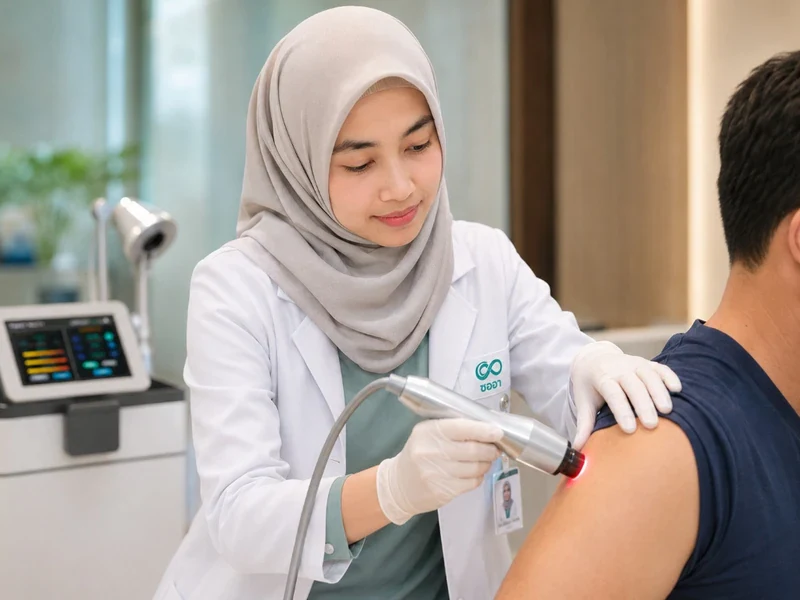
What to know before choosing High Power Laser Therapy
Laser Therapy does not replace examination or active rehabilitation. It may be added when there is a reasonable clinical goal and its effect can be monitored alongside movement and exercise-based care.
May be considered for
- Selected muscle or soft-tissue presentations
- Some sports injuries at an appropriate stage
- Rehabilitation programmes where an adjunct may improve comfort
- Cases screened as suitable by a physiotherapist
Assessment first
- Injury history, medical conditions, medication and photosensitivity
- Pain location, movement and functional testing
- Screening for areas where laser should not be used
- A clear goal integrated with the rest of rehabilitation
How it fits the plan
- Parameters and treatment area selected from assessment findings
- Protective eyewear used according to safety requirements
- Combined with movement and exercise when appropriate
- Response monitored and the plan adjusted
Precautions and information to tell your physiotherapist
- • Protective eyewear is required during treatment
- • Avoid over suspected malignancy or undiagnosed lesions
- • Photosensitising medication or conditions must be disclosed
- • Pregnancy should be discussed with the physiotherapist before treatment
Related conditions
Sports Injury Rehabilitation
Sports injury physical therapy in Hat Yai for muscle, tendon, ankle, knee and shoulder problems, with staged return-to-sport rehabilitation.
View conditionOffice Syndrome / Neck & Shoulder Pain
Physical therapy assessment in Hat Yai for neck, shoulder and upper-back pain related to prolonged desk work, posture and repeated activity.
View conditionChoose treatment from assessment findings, not the technology name alone
At Soah Clinic, a physiotherapist reviews the history and examines movement before deciding whether a modality is useful. Results and rehabilitation time vary between individuals.
Contact the clinicThis page provides general health information and does not replace individual diagnosis, medical advice or emergency care.