


Physical Therapy Service · Hat Yai
Peripheral Magnetic Stimulation (PMS)
Peripheral Magnetic Stimulation uses a magnetic field to stimulate peripheral nerves and muscles without adhesive electrodes on the skin. Whether PMS is suitable depends on the examination findings, goals and medical precautions of each person.
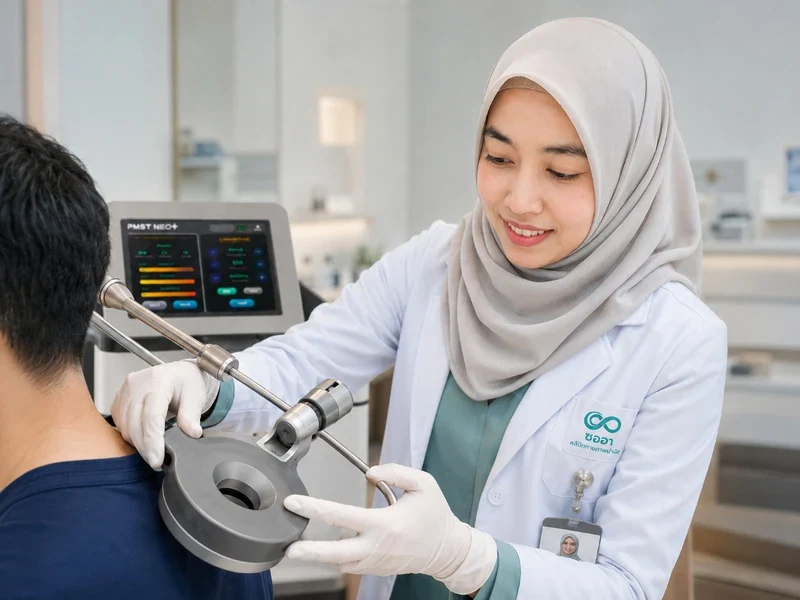
What to know before choosing Peripheral Magnetic Stimulation (PMS)
PMS is an adjunct, not a substitute for identifying the cause of symptoms. Assessment may include movement, muscle performance, sensation, neurological signs and activity limitations before deciding whether magnetic stimulation adds value.
May be considered for
- Selected pain or muscle-tension presentations after assessment
- Muscle activation goals combined with movement retraining
- Selected neuromuscular rehabilitation programmes
- Rehabilitation plans using stimulation together with exercise therapy
Assessment first
- Medical history, medications and implanted devices
- Muscle strength, sensation, movement and relevant neurological signs
- Screening for contraindications and areas that should not be stimulated
- A measurable functional goal for treatment
How it fits the plan
- Intensity and treatment area are selected according to response
- Used with movement practice or exercise when appropriate
- Comfort and function are monitored during treatment
- Need for the modality is reviewed rather than assumed
Precautions and information to tell your physiotherapist
- • Pacemakers or implanted electronic devices must be disclosed
- • Metal or medical implants near the treatment area require screening
- • Pregnancy and some neurological conditions require individual assessment
- • New or worsening weakness or numbness should be assessed before treatment
Related conditions
Low Back Pain / Radiating Leg Pain
Physical therapy assessment in Hat Yai for low back pain, hip pain or pain radiating into the leg, including movement and neurological screening when appropriate.
View conditionSports Injury Rehabilitation
Sports injury physical therapy in Hat Yai for muscle, tendon, ankle, knee and shoulder problems, with staged return-to-sport rehabilitation.
View conditionChoose treatment from assessment findings, not the technology name alone
At Soah Clinic, a physiotherapist reviews the history and examines movement before deciding whether a modality is useful. Results and rehabilitation time vary between individuals.
Contact the clinicThis page provides general health information and does not replace individual diagnosis, medical advice or emergency care.